←
CATEGORY
Pricing
READ
3 min
ISSUED
A change order is a written agreement to do something different from what was priced. Some are unavoidable, such as rot behind a wall that nobody could see. Most are not. They come from a decision nobody made before work started, and they cost more than the same decision made on paper, because the crew is already on site and the schedule is already set.
Why late decisions cost more
A change on the drawings costs an hour of drawing time. The same change during construction can mean a return trip for the electrician, materials that are already bought and cannot be returned, and a week added to the schedule while a new part is ordered. The work itself may be small. The disruption around it is not.
Where they usually come from
In our experience most change orders trace back to three gaps: an outlet or light that was never located on a plan, a finish that was chosen after the rough-in was done, and a built-in piece that was drawn without its dimensions. Each one leaves the contractor to guess, and a guess on site becomes a change order when it turns out wrong.
What a complete drawing set prevents
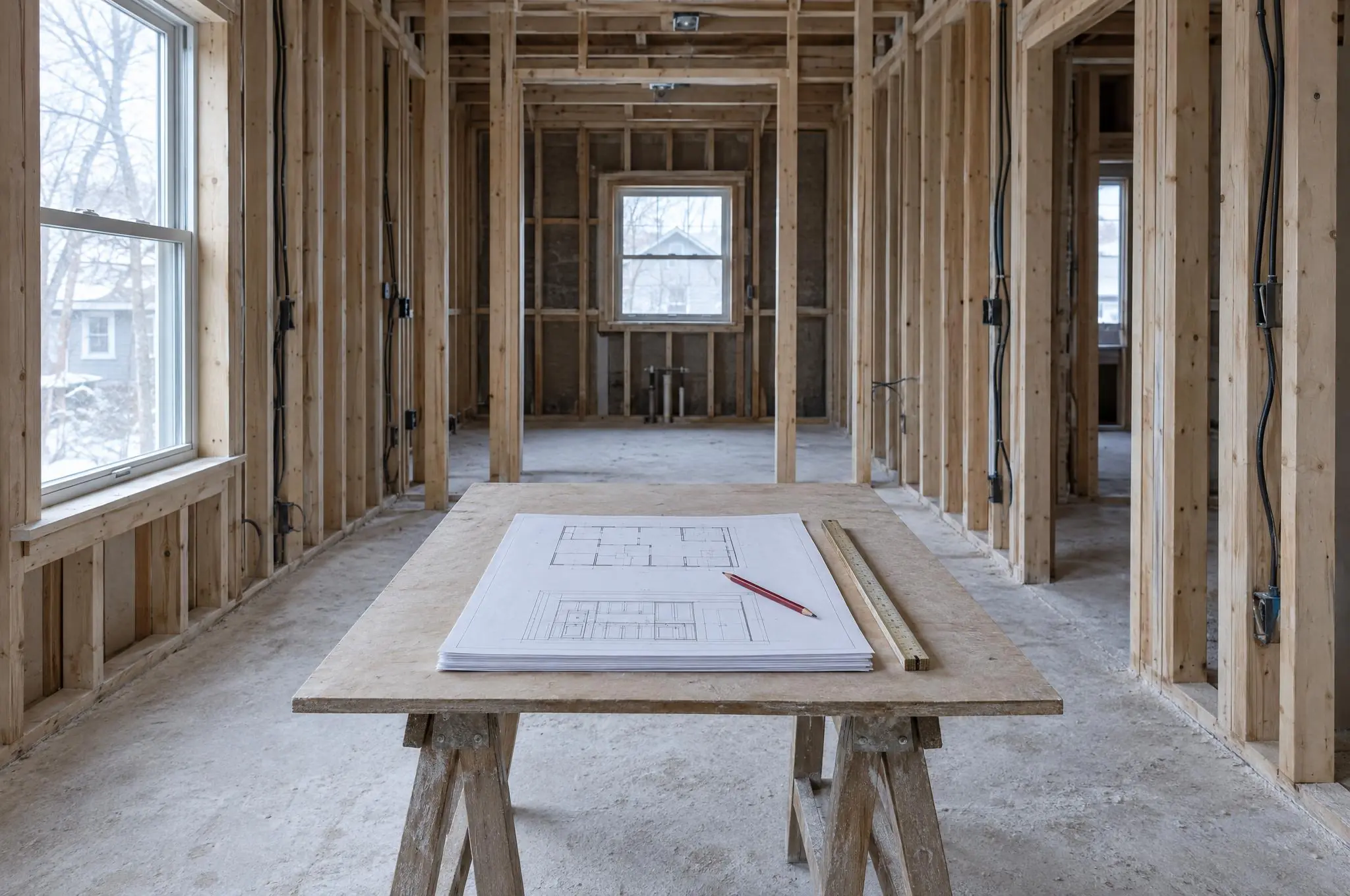
An electrical plan with every outlet, switch and fixture located. A finish schedule with the source and the lead time of every material, decided before demolition. Elevations of every built-in, dimensioned to the eighth of an inch. With those on the table, the contractor prices what will actually be built, and the number holds.
What we do when one happens anyway
We issue a revised sheet the same week, with the change marked and a new revision number, so the whole crew builds from the same drawing. The contractor prices the revision against the sheet, not against a conversation.
No drawing set removes every surprise. A good one turns most of them into decisions made at a desk, where they are cheapest.